


OUR PROGRAMS
Care for the Environment
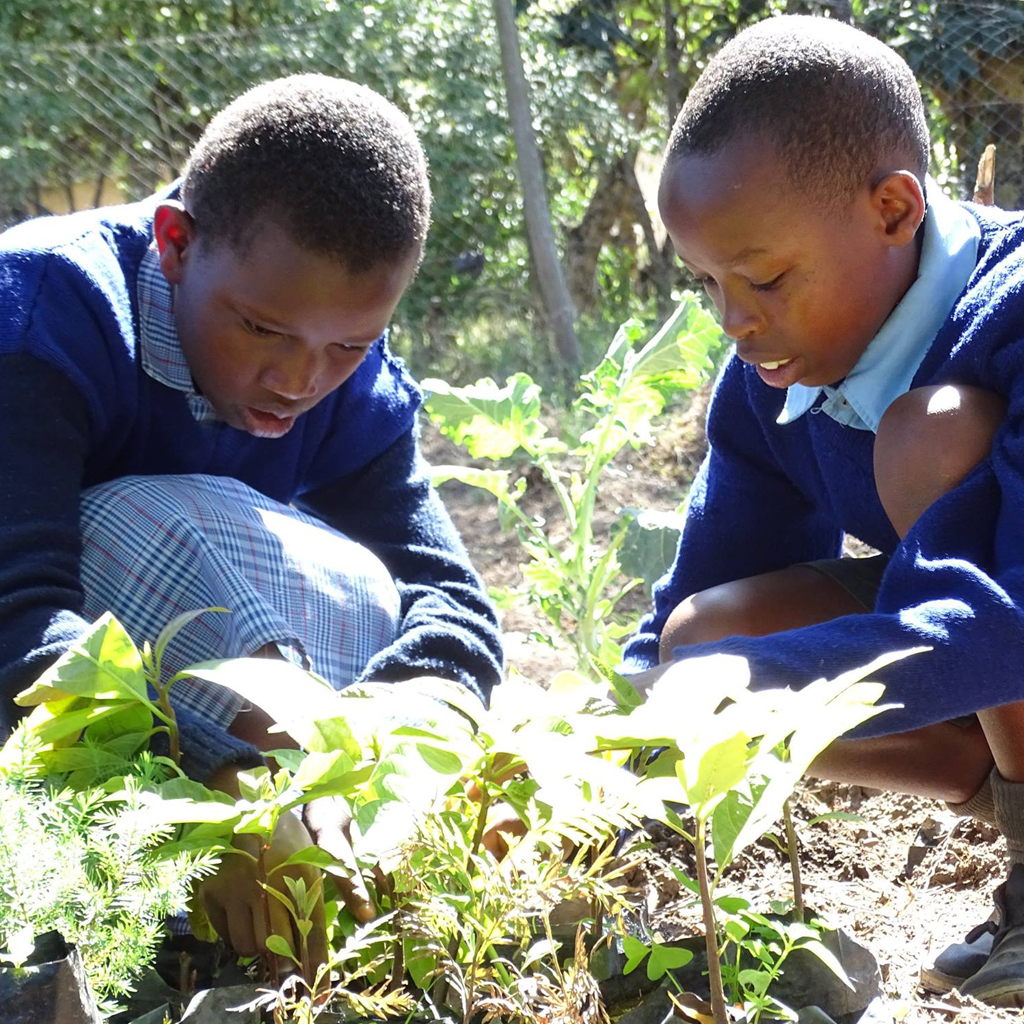
Climate change is a global challenge, and its impact on lives and livelihoods is felt acutely across Africa, particularly in Kenya. In line with SDG 13 'Climate Action', SUED strengthens education on climate change mitigation, helping schools become places of better health, better learning and a better environment. Through local innovation sustainable programs;-
School Forests
We deliberately prioritise the planting of indigenous and climate-resilient tree species that are appropriate for local conditions. Planting suitable indigenous species also helps schools create environments that can support local biodiversity while reducing the risk associated with introducing inappropriate tree species. By considering the changing climate and local ecological conditions, SUED seeks to ensure that today's planting contributes to resilient school environments for future generations.
Through our 'Grow and Adopt a Tree' project, we reinforce the value of care for the environment. Every child is encouraged to water, protect, monitor, and nurture their trees, developing a sense of ownership and accountability.
When students take responsibility for a tree, they begin developing personal management skills such as accountability, time management, commitment, hard work, and resilience. Each watering session becomes a lesson in commitment. Each new leaf becomes a reminder that small actions produce meaningful results over time.
Trees planted within the school compound contribute to creating greener, healthier, and more conducive learning environments. As the trees mature, they will provide shade for learners, improve the appearance of school compounds, and contribute to more comfortable outdoor spaces for learning and recreation.
This creates a safe and stimulating environment where every child thrives in a child-friendly learning environment. This is reflected in reduced bullying, stronger cohesion and teamwork, improved school attendance and less absenteeism, fewer disciplinary issues, a richer peer-learning culture, assignments completed on time, and improved overall performance. A school transformed by trees becomes a green space where children can play, study, and eat lunch in the shade. By deliberately growing indigenous tree species, some at risk of disappearing altogether, we add more than shade: many are medicinal, some bear wild fruit that draws birds to nest, and together they form a small, complete ecosystem within the school. For these children, it may be the only place they ever experience one.
With your support, every child gets the chance to plant, protect and grow a tree of their own — turning one small act of care into a greener, healthier school for generations of children still to come.
School Gardens
In rural Kenya, climate variability, prolonged drought and limited access to nutritious food continue to affect children and families. We are responding by turning schools into practical learning spaces where children can discover how sustainable agriculture, water conservation and nutrition can work together to strengthen household and community resilience. With the main focus on fruit trees and vegetables, we support schools in supplementing the school feeding dietary programs. For many children living in rural communities, access to fresh fruits is not a regular part of their diet. Household incomes are often prioritised towards essential needs, while fruits may be viewed as an occasional food rather than an everyday source of nutrition. This can limit children's access to important vitamins, minerals and dietary diversity during their formative years.
The school gardens are more than a place to grow vegetables, it is a living classroom and a source of nutrition. As fruit trees and vegetable gardens mature and begin to produce, the harvest can contribute valuable nutrients to children's diets. Learners gain a practical understanding of where food comes from, how it is grown, and why diverse, nutritious foods are important for healthy development. By participating in planting, watering, nurturing, and harvesting, children also develop valuable life skills, including responsibility, patience, environmental stewardship, and an appreciation for sustainable food production. We demonstrate farming and gardening practices and introduce local seed varieties that are resistant to disease and drought, providing seeds for children to plant themselves. As the fruit trees and vegetable gardens begin to yield, they add important nutritional value to children's diets. Rainwater collected from school rooftops is used to irrigate the crops, closing the loop between what falls from the sky and what ends up on a child's plate. In this way, we also show the wider community practical ways to withstand prolonged drought and sustain food security in these rural parts of Kenya.
Your support helps turn school gardens into a source of daily nutrition for children and a model of food security the whole community can learn from.
Tuza Mwana (Award a Child)
To recognize and motivate children who demonstrate exceptional commitment to caring for their adopted trees, Tuza Mwana awards schools that have exhibited outstanding environmental stewards with Correct Books.
This transforms environmental responsibility into a positive and rewarding learning experience, encouraging children to see themselves as active contributors to a greener future.
Correct Books are reusable notebooks made from recycled materials, reinforcing the environmental message at the heart of the initiative.
Their reusable design gives children additional opportunities to write, draw, practise and improve their handwriting, while demonstrating how recycled materials can be transformed into useful learning resources.
The initiative therefore creates a meaningful connection between environmental action and education: children care for living trees in their school compounds while receiving learning materials created from recycled resources.
For SUED, Tuza Mwana goes beyond rewarding individual children. It is an investment in behaviour change, environmental stewardship and child-led sustainability.
By recognizing children who care for trees, the programme makes environmental conservation visible, valued and aspirational among learners and their peers.
Through donor support, initiatives such as Tuza Mwana can help cultivate a generation of children who understand that protecting the environment begins with small actions, sustained commitment and collective responsibility.
With your support, Tuza Mwana turns caring for a tree into a rewarding achievement, giving children a reusable notebook made from recycled materials and the confidence that their small, everyday actions truly matter.
Ambassadors of the environment
Through our Ambassadors of the Environment programme, we empower children and young people to become active champions of environmental conservation within their schools and communities.
A key component of the programme is SUED's annual participation in World Environment Day, which provides a platform for learners, teachers, community members and partners to come together to raise awareness and take collective action for environmental protection.
Through tree planting, environmental education and community activities, participants develop a stronger sense of ownership and responsibility for their surroundings.
The Ambassadors also participate in community clean-up activities, transforming environmental awareness into practical action. These activities help learners appreciate the importance of clean and healthy environments while encouraging them to become advocates for responsible waste management within their homes, schools and communities.
Building on this foundation, we are currently advancing an innovative plastic waste recycling initiative in partnership with Gilgil Technical and Vocational College (TVC).
The initiative explores ways of transforming discarded plastics into useful and sustainable building materials, creating an opportunity to address plastic pollution while promoting innovation, skills development and the circular economy.
This partnership connects environmental education with technical and vocational skills, enabling young people to see waste not simply as a problem, but as a potential resource for innovation and economic opportunity.
Your support helps children grow from environmental advocates in their own schools and communities into young innovators, turning today's plastic waste into tomorrow's building materials.
Greenery and Education: The positive effects of greenery in urban environments. J.A. Hiemstra et al. (WUR) & J. Maas (VU Amsterdam)
.
Effects of indoor plants on office workers. Sjerp de Vries et al., Frontiers in Psychology, 28 June 2023
.
Why Schools Should Plant Trees. H. Smith and R. Davis, PennState Extension, 17 February 2023.

SUED is transforming rural communities through books, value-based education, teacher empowerment, and climate action to nurture responsible future generations.
- Choose your favourite cause
- Empower future generation
- Donate the amount you like
- Stay tuned about cause